How Is small molecule peptide from fish maw Made?
Nov 24, 2026
Small molecule peptide from fish maw are made by breaking the collagen in dried fish swim bladders into short peptide chains. The process begins with raw material selection and cleaning. Controlled enzymatic hydrolysis then cuts the protein under set pH, temperature, and time. Filtration, concentration, drying, testing, and packaging follow. I wrote this guide for supplement brands, distributors, and OEM/ODM buyers who want to understand each step before they place an order. Below, I explain the process, the specifications that matter, and the questions to ask any supplier, including BioSpark.
What Is Small Molecule Peptide from Fish Maw?
Definition and Source Material
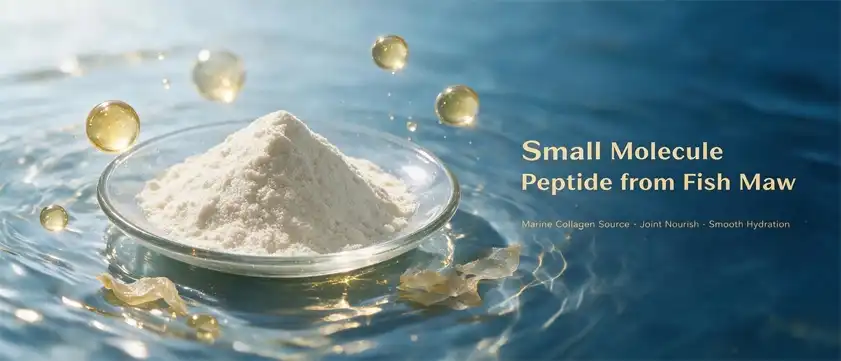
Small molecule peptide from fish maw is a protein that has been broken down. This item is made from fish maw, which is dried fish swim bladder. It has been used as a tonic in Chinese food for a long time because it has a lot of collagen. Collagen is broken up into short peptides that break down more easily in water. It talks about a range of peptide sizes, not just one size. I need to be clear about what I mean by "small molecule." Users should always ask about the molecular weight distribution and the test method that was used to get it, since each seller sets its own range. Less isn't always better when it comes to quality; taste, color, and yield are also important.
Collagen, Gelatin, and Short Peptides
Schmidt et al. (2016) and other reviews on extraction say that native collagen is made up of three helices that are about 300 kilodaltons (kDa) long. That big thing doesn't break down very well in cold water. In some places, heat or chemicals must break down collagen in order to make gelatin. It gels when it cools, which is good for sweets and containers but not for drinks that are clear. When collagen is broken down, it does more. Hydrolysates that stay liquid and are easy to spread out are discussed in reviews like León-López et al. (2019). These are very light molecules, with weights of only a few kDa. There will be less of a smell, and it will be easier to mix the small-molecule peptide from fish maw into powders and ready-to-mix drinks. It still needs batch data for each item to show where it fits in that range.
Fish Maw Peptide Versus Other Marine Collagen
Small molecule peptide from fish maw can only be found in the swim bladder. Most of the time, skin, shells, bones, or a mix of these come from other parts of marine collagen. The source tissue changes the price, the smell, the color, and the amino acid profile. In 2011, Gómez-Guillén et al. looked at collagen and gelatin from various sources and found that their useful traits change depending on the type of tissue and species. Teams that need to buy something need more than just the part's name. It's best to compare things that have been tested and shown to be accurate, like species, molecular weight distribution, solubility, smell,
color, and the ability to track back to the source. A swim bladder peptide might work well in clear drinks and fancy recipes, while collagen from skin might work well in cheap mixes. The best choice is not based on how it ranks in general, but on what it does in the end.
How Small Molecule Peptide from Fish Maw Is Made, Step by Step
Raw Material Selection, Cleaning, and Pretreatment
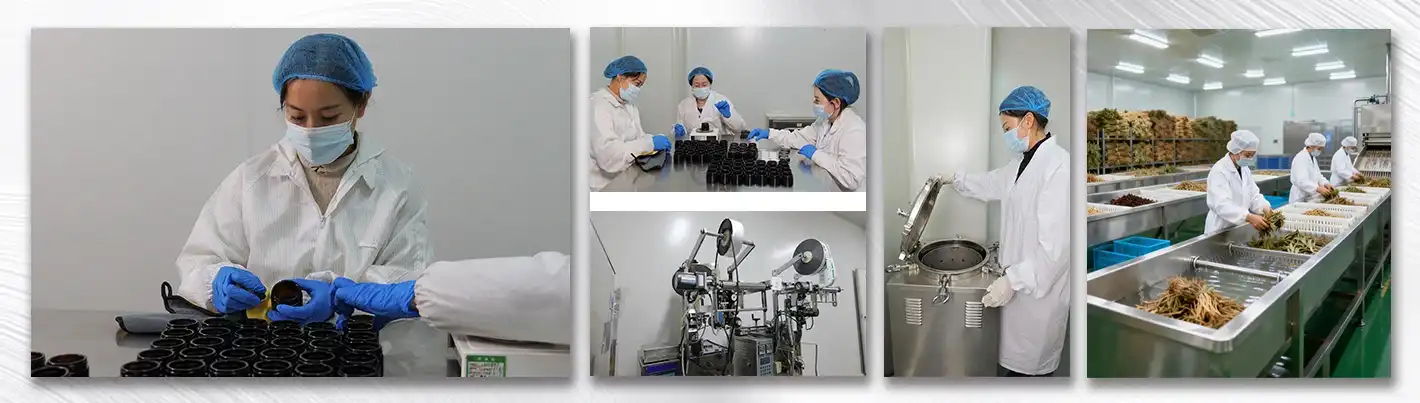
You have to dry out the swim bladder first in order to get good small molecule peptide from fish maws. The fish should be of the right species, come from the right place, be fresh, and not have any heavy metals or other contaminants in it. After that, the maw is washed and soaked to remove any blood, fat, or dirt that is on the outside. The next step is the pretreatment. To get the pH back to neutral, things are often soaked in a mild acid or alkaline solution, cut or ground, and washed. So that enzymes can get to the protein, these steps break up the thick threads. If you don't prepare it right, the powder might smell and look more like fish when it's done. At this time, the goods can be tracked, so each lot should have records of the seller, the batch number, and the inspection results.
Enzymatic Hydrolysis and Enzyme Inactivation
A first step in making small-molecule peptides from fish maw is to use enzymes to break down the material. In water, proteases that are safe for food cut collagen chains into shorter ones. The producers change the mixture's pH, temperature, enzyme dose, reaction time, and solids concentration. A temperature range of 40 to 60 °C and a pH level of almost neutral to slightly alkaline are good for many processes. However, the enzyme will determine the exact settings that work best. A longer process normally makes the molecular weight go down, but it can add flavor. Nielsen et al. (2001) talked about a usual way to check the amount of hydrolysis, which helps the plant keep track of its progress. Heat stops the process and turns off the enzyme when the goal is met. This evens out how the peptides are spread out.
Filtration, Concentration, Drying, and Packaging
If you turn off the enzyme, the liquid goes through filtration to get rid of solids that can't be broken down. A lot of plants narrow the range of molecular weights by adding membrane steps. After that, it might be deodorized or decolored to make it look and smell better. The solids in the clear solution are then mixed together and dried to make a powder. The powder is made sure to be the same size by milling and screening it. Try wrapping in things that won't get wet, and store in a cool, dry place are the last steps. Peptide powders can soak up water, so how they are stored and packed directly impacts how well they flow and how long they last. You should ask your supplier for a simple process flow chart that shows where each control point is.
Enzymatic vs. Acid Hydrolysis and Specification Data
Enzymatic Versus Acid Hydrolysis
They each break peptide bonds in their own unique ways. Heat and strong acid are used to break down acids. It works quickly, but you can't pick and choose as well. Some amino acids, like asparagine and glutamine, could turn into their acid forms. It could also change the taste and color. Salts that need to be removed are also left over after neutralization. It is easier to change peptides' size, taste, and performance when they are broken down by enzymes. This is because the cutting happens more gently and at the right places. This is why many suppliers choose enzymes when they need to make small-molecule peptides from fish maw for supplements and food. I wouldn't say that all the time one way is better than the other. To make sure the route fits the molecular weight, sensory description, target market, and test data given, buyers should look at it.
Reading Molecular Weight Data
You can give the molecular weight of the fish maw peptide as a range, a spread, an average, or a degree of breakdown. An average can hide a wide range, and two lots with the same average may make drinks taste different. If someone gives you a price for a small molecule peptide from fish maw, you should ask how many are in each band, such as less than 1,000 Da, between 1,000 and 3,000 Da, and more than 3,000 Da. Then, find out how the numbers were gotten, such as through size-exclusion chromatography or HPLC-based testing. From one batch to the next, make sure that the standards, method, and column don't change. Different ways of getting results make it hard to compare them.
Amino Acid Composition and Key Specifications
The fact that it is made up of hydrolyzed fish maw peptides shows that it comes from collagen. Glycine makes up about a third of collagen residues. Proline, hydroxyproline, alanine, glutamic acid, and arginine are some other well-known amino acids. You should ask for an amino acid profile for each product because the amounts change based on the type of animal and how it was processed. You should also write down the humidity, ash, pH, solubility, bacteria, heavy metals, smell, color, and the ability to track the product on a specification sheet. BioSpark's small molecule peptide from fish maw is a white, fluid powder that doesn't smell or taste too bad and has a taste that is a little tart. It turns into a clear liquid when its short, straight oligopeptide chains mix with cold water. Batch data should show that these traits are true.
Applications of Small Molecule Peptide from Fish Maw in B2B Products
Dietary Supplements and Beauty Drinks
The best fits are powders, pouches, and drinks that are already mixed. When it comes to vitamins, I think you should check the dosage, flowability, hygroscopicity, taste, and whether it works with capsules or powder mixes. It's important for beauty drinks to mix fast, not smell bad, be clear, and not settle too much. A small molecule peptide from fish maw that breaks down quickly in cold water meets these needs. Bolke et al. (2019) did a randomized, placebo-controlled study on a collagen supplement. They found that the skin was more moist, elastic, rough, and dense. There was no test of fish maw in that study. Brands need to use this data to back up what they say and follow FDA rules about shape and function.
Joint, Recovery, and Wellness Nutrition
Joint and recovery blends are not the same as other types of oils. A study by Garcia-Coronado et al. in 2019 looked at randomized studies that examined collagen supplements and complaints of osteoarthritis. They also said that more good research should be done. A lot of the time, type II collagen or chondroitin sulfate is mixed with collagen fibers. They are in sports nutrition brands' protein or recovery drinks. A small molecule peptide from fish maw is also used to come up with food ideas for pregnant women and people who have just had surgery, but this raises more regulatory questions. You should read over the local labeling rules before you launch. You should know about taste, heat stability, and amino acid data because they affect how much protein a product claims to have and how well people like it.
Skincare and Custom Formulas
Small molecule peptides from fish maw might be interesting to people who make masks, serums, and powders that have been frozen. For cosmetic use, the grade needs to be pure enough in terms of bacteria, color, smell, and how it works with other ingredients. People who want to buy should first check to see if the grade is available. One more use is that brands mix the peptide with vitamins, hyaluronic acid, or plant-based products to make custom diet plans. BioSpark's OEM and ODM services, which include coming up with ideas, making the products, putting them up, and sending them out, help with these projects. We can change the dosage forms to fit the needs of our clients, no matter how big or small the order is. I always tell people to test a small amount of the recipe before using the whole thing, because pH, heat, and other things can change how the ingredients mix and taste.
Quality Checks and Supplier Selection for Small Molecule Peptide from Fish Maw
Tests to Run Before a Bulk Purchase
Check the molecular weight distribution, the amount of peptides or proteins, the amino acid profile, the moisture, the ash, the pH, the solubility, the safety for microbes, and the heavy metals in the lab as a first step. Then, check how quickly it breaks down, how much it sets, how it looks, feels, and tastes, and how stable it is when stored. You can be more sure of the results if you compare two or three samples of small molecule peptide from fish maw that were all taken in the same way. In the US, 21 CFR Part 111 says that companies that make dietary supplements need to use good manufacturing practices at the moment. One way to do this is to check that the supplements have the ingredients they say they do. After making sure everything is okay, check each new batch against a reference sample that was saved and its COA.
Documents, OEM/ODM Support, and Delivery
You should know the grade, molecular weight range, amount of peptides, packaging, final market, and OEM needs before you ask for prices. After that, the seller must give you a COA, a specification sheet, an SDS, reports on heavy metals and microbes, an allergen statement, and a record of how the goods were made. In the U.S., signs have to say that fish is a major food allergy. BioSpark uses international quality systems to keep an eye on the raw materials, production methods, and final goods it sends to markets in South America, Japan, the Middle East, and North America. Couriers like UPS, DHL, and FedEx offer free shipping. Freight sent by sea takes 5 to 10 work days to get there, while freight sent by air takes 20 to 45 days. Terms like FOB, CIF, DAP, and DDP can be used.
Common Mistakes to Avoid
The first mistake is accepting the phrase "small molecule" without a molecular weight range, test method, and batch evidence. The second is choosing the lowest price per kilogram. In the long run, it may cost you more if you have bad paperwork, poor quality, bad taste, or broken packaging. The third is skipping checks on fish species, origin, and allergen status. The fourth is testing samples only in water instead of the real formula. A written quality agreement can help you avoid most of these issues. There should be clear rules about how to accept, change, release batches, deal with complaints, keep samples, make returns, and who is in charge of communicating. You should get help from a professional when comparing prices, and you should look at more than just the unit price.
Conclusion
Small molecule peptide from fish maw is made from dried swim bladders that have been broken down by water. It is picked, treated ahead of time, broken down with controlled enzymes, enzymes turned off, filtered, concentrated, dried, and packed. Most of the time, enzyme hydrolysis is a better way to control the size and quality of peptides. On the other hand, acid hydrolysis is not as specific and leaves behind neutralization leftovers. "Small molecule" only means something if you know how its molecular weight is distributed, how it will be tested, and what amino acids it contains. The source of gelatin and other marine collagens is different from fish maw peptide, as is the way it dissolves. The best specification depends on what it is used for, like a skin care formula, supplement, or beauty drink. We can use what we learn from collagen peptide research, but it doesn't mean that all of the products we test will work. Because of this, written specifications, testing in batches, pilot tests, and a clear quality agreement are all important for good buying.
FAQ
What is a small molecule peptide from fish maw?
A part of food made from dried fish swim bladders that breaks down collagen. The people who make the protein cut it up into short peptide chains. A "small molecule" can be anywhere in a range, so ask each provider about the test method and how the molecular weight changes.
Which hydrolysis method is better?
Both are good sometimes, but not all the time. Enzymes break down peptides, which makes it easier to change their size, taste, and color. It is faster for acid to break down things, but it is less selective and needs to be neutralized first. The test data, target market, and specifications can all be used to sort.
Which documents should I request?
A COA, a specification sheet, an SDS, microbiological and heavy metal reports, and tracking records are some of the things you should ask for. You should get a sample to see how it works before you place a large order.
Does BioSpark offer OEM and ODM services?
Yes. With OEM and ODM services, BioSpark can make goods in any shape or size that the customer wants. The company can handle both small and large production runs.
Request a Small Molecule Peptide from Fish Maw Sample from BioSpark
Looking for a small molecule peptide from a fish maw manufacturer that supports OEM and ODM projects from small batches to large orders? BioSpark can review your target application, specification, annual volume, and destination market, then prepare a sample and quotation. Email sales@biosparkcn.com or visit https://www.biosparkcn.com/ to start your inquiry. Our team provides full-process support from formulation to delivery.
References
1. Food Hydrocolloids, 2011. Functional and bioactive properties of collagen and gelatin from alternative sources: A review.
2. International Food Research Journal, 2016. Collagen extraction process.
3. Molecules, 2019. Hydrolyzed Collagen—Sources and Applications.
4. Journal of Food Science, 2001. Improved method for determining food protein degree of hydrolysis.
5. Nutrients, 2019. A Collagen Supplement Improves Skin Hydration, Elasticity, Roughness, and Density: Results of a Randomized, Placebo-Controlled, Blind Study.
6. International Orthopaedics, 2019. Effect of collagen supplementation on osteoarthritis symptoms: a meta-analysis of randomized placebo-controlled trials.

Send Inquiry
You may like