How Is bulk creatine monohydrate powder Tested for Purity?
Nov 18, 2026
It takes more than one test in the lab to be sure that bulk creatine monohydrate powder is pure. Labs use FTIR or Raman spectroscopy to make sure they know what a substance is. They also use HPLC to find out how much of it is active and what other substances are in it. Finally, they use Karl Fischer titration or loss on drying to see how much water is in it. They also use ICP-MS or ICP-OES to find heavy metals and standard culture methods to find microbes. After that, each batch's unique Certificate of Analysis (COA) has a record of each result, method, and lot number. This guide tells you about each test and how to read a COA. It also talks about how BioSpark helps people who want to buy.
Introduction: Why Purity Testing Matters for Bulk Creatine Monohydrate Powder
What Does "Pure" Mean for Bulk Creatine Monohydrate Powder?
Tests have shown that it is definitely creatine monohydrate. An assay is used to find out how much of the active compound it contains. Heavy metals, microbes, or process residues are not present because neither result shows any of these things. Buyers should also look at the consistency of the batch, the size of the particles, the amount of water in the product, and how it looks and dissolves. Its molecular weight is 149.15, and it's made up of 88% creatine and 12% crystal water, so it's important to know how to figure out any percentage. Find out whether a result is given "as is" or "on a dry basis." The needs change depending on the product and market it will be sold in.
Why a 99.9% Claim Needs Proof
A number doesn't say much by itself, but they often say something like "99.9% pure" in the first email. A clear method, a named lab, a specification, and a lot number are all things that must be present. For those who don't know, two suppliers can print the same number from different tests. If you buy our bulk creatine monohydrate powder, it has to meet an HPLC standard of at least 99.5%, and we give you the COA so you can check the batch and method for yourself. It is better to have a clear description that you can check than a big number that you can't find.
Documents to Request Before Any Order
To start the conversation, bring up some paper. When you buy bulk creatine monohydrate powder, ask the company for a COA that is specific to the batch, the product specification, an SDS (safety data sheet), and copies of any certificates that you need. There should be a lot number, the date it was made, the date it was tested, and either the date it needs to be tested again or the date it goes bad on the COA. 21 CFR Part 111 says that companies in the US that make dietary supplements need to make sure that each ingredient they use is what it says it is. This means that these records will still be needed by your quality team. Getting them early also lets you know how willing the supplier is to let you test them before you buy a lot of them or samples of them.
Laboratory Tests Used to Verify Bulk Creatine Monohydrate Powder Purity
Identity Testing With FTIR or Raman Spectroscopy
Identity testing is a simple way to find out if something is really creatine monohydrate. The FTIR and Raman spectroscopies both look at molecules and record the unique patterns they make. The lab then checks that fingerprint against a well-known standard. A match proves what you said. Take this step because even if the reading seems high, it could still be the wrong compound or a mix. Talk to the lab about what standard they used as a guide and if the instrument has been trained. A COA will often say "conforms" to show identity results. Find the name of the method next to that word.
Assay and Related Substances by HPLC
An HPLC is the main way to find out how much creatine is in something. There is a liquid column and a detector that separate the creatine from the other compounds and measure each one. There is a tried-and-true way to find related substances like creatinine, which is a breakdown product, and dicyandiamide, which has been talked about in reviews of creatine quality as a possible synthesis residue. We promise that our bulk creatine monohydrate powder is at least 99.5% pure by HPLC. As you read the result, pay attention to the reporting unit, the calibration standard, and the acceptance criteria. The ICH Q2(R2) standard tells labs how to make sure that their analytical methods are correct. The supplier needs to be able to explain how their method meets that grade.
Moisture Testing: Loss on Drying and Karl Fischer
When you read moisture, you need to be cautious when you use a monohydrate. The crystal water (approximately 12% of the molecule) has to be mentioned. Karl Fischer titration is used to determine the precise quantity of water present, and loss on drying is used to determine the weight lost on heating. Either can work, depending on demands. Too much free moisture should be avoided since it makes caking more probable and filling lines run more slowly. Ask the provider about their rates and how they would want to be paid. The level of moisture was the same throughout the batches thus it seems the drying and packaging stages went OK.
Safety and Physical Quality Tests for Bulk Creatine Monohydrate Powder
Heavy Metals by ICP-MS or ICP-OES
Routine testing does not detect heavy metals, and so a specialised test is needed. ICP-MS or ICP-OES testing of bulk creatine monohydrate powder shows trace levels of lead, arsenic, cadmium, and mercury. Choosing the correct cap will depend on your market, the serving size, and what your consumers desire. Pet food, products for healthy ageing, and other helpful foods may contain heavy metals up to 10 parts per million (ppm). And obey the regulations where you are too, please. USP general chapter shows you how much of elemental contaminants you may find in dietary supplements per day in the US. "Many brands use this chapter as a guide." Don’t just say pass; obtain stats so your team can compare a lot.
Microbiological and Banned-Substance Screening
Microbiological tests mainly look for yeast and mould, coliforms (also called Enterobacteriaceae), Salmonella, and E. coli. The market and the method will change, so you need to determine the panel in advance. What solvents and residues from the process remain after the synthesis procedure? It is contingent upon the route. Most brands of sports nutrition take more. A standard COA does not contain banned substances. The finished product may have to go through NSF Certified for Sport or Informed Sport. Let your supplier know right away whether your label will require that kind of certification. That will affect how you get information and keep track of things.
Physical Tests: Particle Size, Solubility, and Flowability
Chemical purity tells you nothing about how the powder will perform on your line. Particle size impacts how they spread, how they feel in the mouth, and how well they mix. Particle sizes available range from 80 mesh to 200 mesh. In general, larger bits pass through hoppers more easily than smaller particles. Smaller chunks blend well and settle less in liquids. You may break particles into smaller particles. The molecules that make up the particles do not change. One litre of water at 20 °C may dissolve about 14 grams of creatine monohydrate. Try the solubility with your own stirring, your own concentration, your own temperature. It’s helpful to examine colour, scent, and foreign stuff, but lab data is better.
COA Review, Supplier Controls, and Storage for Bulk Creatine Monohydrate Powder
How to Read a Certificate of Analysis
Useful COAs include the product name, grade, lot number, manufacture date, test date, retest date, or expiry date. The specification, the sample, the procedure, and the lab may also be found. Numbers. Not “pass” or “meets.” If you need to determine the danger, ask about constraints on what you may disclose. Red flags include results that are the same for multiple lots, unclear lab names, dates that have already passed, and generic forms that do not match the grade you purchased. Among the documents that may be used as evidence are the specification, SDS, declarations of origin, quality system certifications, and strength data. “Verify the lot number on the drum with the lot number on the COA before shipping anything.
Supplier Quality Controls and How to Compare Suppliers
This is done at every stage, not just at the conclusion. To manufacture anything, you need first chemical building pieces like cyanamide and sarcosine. Then the batch is inspected, modified, and given one more test. Last but not least, it comes with a COA. As you learn to keep track of plenty of things and correct them, you will feel better. Then evaluate bulk creatine monohydrate powder vendors side by side on testing depth, COA transparency, batch uniformity, MOQ, packaging, lead time, export experience, and technical support. You should be able to back up assertions like "pharmaceutical grade" and "food grade." You could also ask whether the seller is a seller or a manufacturer. This might alter how items are designed and monitored.
Storage and Shelf-Life Considerations
The powder is shipped in 25 kg drums. Do not store bulk creatine monohydrate powder in direct sunlight, heat, or moisture, because free moisture can cause caking, slow filling lines, and reduce flowability. Keep drums sealed, cool, dry, and clean, off the floor and away from strong odors. Follow first-in, first-out stock rotation, record the lot number, and check the retest or expiry date so each batch stays within specification.
A Practical Verification Workflow for Buyers of Bulk Creatine Monohydrate Powder
Define Requirements and Request Samples
What do you need? Write down the target assay, the particle size, the packaging, the market you want to sell to, and any rules that need to be followed for sports safety. Then, ask for samples of the bulk creatine monohydrate powder along with the specs, an SDS, a batch COA, and copies of the certificates. Print out a lot number and get a sample to compare it to. Test a small amount of your blend or filling before you go big. Make sure the mix doesn't get lumpy over time if you want to mix creatine with things that soak up water, like citrulline malate or beta-alanine. Also, ask the supplier how to keep the water level in check. In the long run, this little thing might save you a lot of money.
Independent Testing and Ongoing Monitoring
To place a large, private-label, or high-risk order, send a sample of the bulk creatine monohydrate powder to a different lab. You should pay the most attention to ID, assay, moisture, heavy metals, microbiology, and any other impurity that your customers care about. Compare the results to the supplier's COA. Make sure that the goods are checked when they come in from the source you choose. Also, the supplier should be required to inform you of any changes to the process. Make sure that the steps for making complaints and recalls are always up to date. 21 CFR Part 111 of the FDA's cGMP rules for dietary supplements says that tests must be specified and written down. Keeping these records will also help you follow the rules.
What BioSpark Offers for Bulk Creatine Monohydrate Powder
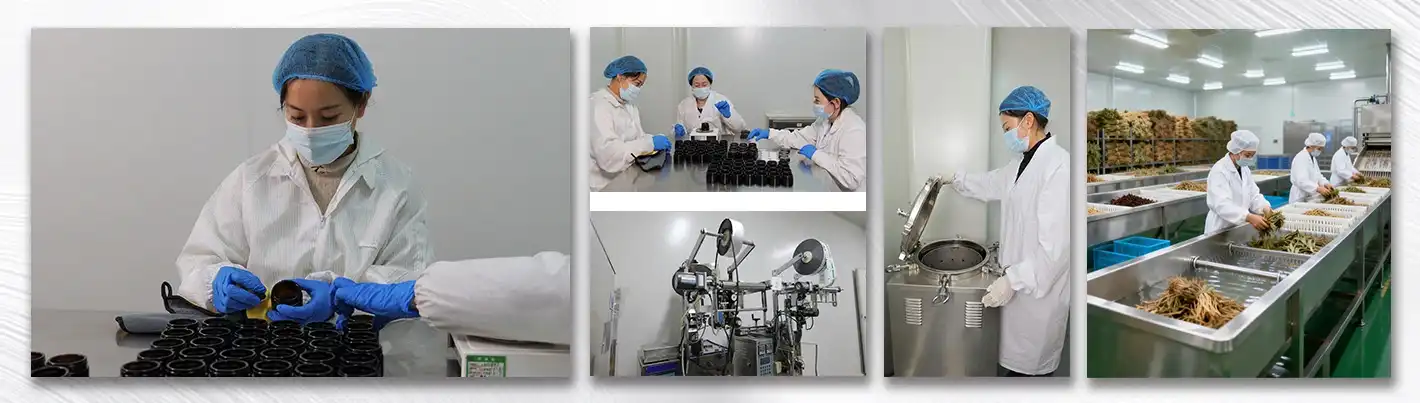
A company called BioSpark (Xi'an) Biotechnology Co., Ltd. sells bulk creatine monohydrate powder that is made in China by mixing sarcosine and cyanamide chemically and then making the mixture better. The test with HPLC shows that the item is at least 99.5% pure. It looks like a crystalline powder that is white to off-white and has no smell. The powder comes in drums of 25 kg, and the pieces are between 80 and 200 mesh in size. The least a business customer can order is 1 kg. We offer OEM and ODM services for sports nutrition brands, distributors, and contract manufacturers. These services can be used for small batches or mass production. Protein bars, energy drinks, ready-to-drink drinks, pet food, and products for healthy aging are all common places to find it. Please ask for a COA and copies of the certificates before you place an order. Dosage, labeling, and health claims are still up to the brand. People who have kidney problems should talk to a doctor before taking creatine.
Conclusion
There is more than one percentage you need to look at to see how pure bulk creatine monohydrate powder is. FTIR or Raman tests make sure the material is what it says it is, HPLC tests look for assay and related chemicals, and moisture tests make sure the drying and packing are done right. ICP-MS or ICP-OES, microbiological panels, and banned-substance programs are used to make sure that everything is safe. The particle size, how well it dissolves, and how well it flows all affect how well the powder works on production lines. The lot, method, lab, and number results are the only ones that make a COA useful. There are controls on the supplier, storage conditions, and stability data that make sure the quality stays the same after the product is released. Buyers can be sure they can trust a process that goes through a series of steps, such as going over the specifications, sending samples, having them tested by a third party, and continuing to keep an eye on things. Purity isn't just one big claim; it's a set of results that have been proven to be true for each batch.
FAQ
What tests confirm the purity of bulk creatine monohydrate powder?
FTIR or Raman tests are used to find out what something is. HPLC tests are used to find out about moisture, heavy metals, microbiology, and physical checks. The exact panel changes for each market and process.
Can a 99.9% claim replace a COA?
Not at all. To back up a claim, you need a COA for a certain batch, a clear method, and a named lab. Our item needs to be at least 99.5% by HPLC.
When should I use third-party testing?
You should use it for large orders, private labels, or orders that come with more risk. It should also be used whenever you need a second opinion on identity, assay, heavy metals, or microbiology.
How do fine and coarse grades differ?
Up to 200 mesh grades mix better and don't settle as much in drinks. Of the time, 80-mesh material that is rougher moves through hoppers more easily. They both have the same thing in them.
How should I store the powder?
Close it up and put it somewhere cool, dry, and clean that isn't near light, heat, or humidity.
Request Bulk Creatine Monohydrate Powder Documentation from BioSpark
Want a business that sells bulk creatine monohydrate powder and is honest about the tests it does? BioSpark has HPLC purity of at least 99.5%, 25 kg drums, a 1 kg minimum order for businesses, and helps with both OEM and ODM. You can email leao@biosparkcn.com or visit https://www.biosparkcn.com/ to get more information and a CDA. Once you tell us your market, grade, and volume, we'll send your team the information they need.
References
1. Journal of the International Society of Sports Nutrition, 2017: International Society of Sports Nutrition position stand: safety and efficacy of creatine supplementation in exercise, sport, and medicine.
2. Federal Register, 2007: Current Good Manufacturing Practice in Manufacturing, Packaging, Labeling, or Holding Operations for Dietary Supplements (21 CFR Part 111).
3. Amino Acids, 2011: Analysis of the efficacy, safety, and regulatory status of novel forms of creatine.
4. AAPS PharmSciTech, 2003: Evaluation of the stability of creatine in solution prepared from effervescent creatine formulations.
5. International Council for Harmonisation, 2023: Q2(R2) Validation of Analytical Procedures.
6. Journal of the International Society of Sports Nutrition, 2021: Common questions and misconceptions about creatine supplementation: what does the scientific evidence really show?

Send Inquiry
You may like