How Does kudzu root peptide Work in the Body?
Nov 23, 2026
Kudzu root peptide works in the body much like other hydrolyzed plant proteins. After you swallow it, stomach and intestinal enzymes cut longer chains into short peptides and free amino acids. The small intestine absorbs these pieces through peptide and amino acid transporters, and the body uses them as nutritional building blocks. Scientists are still studying whether specific kudzu peptide sequences also carry biological activity, so outcomes depend on molecular size, sequence, and product form. I wrote this guide for supplement brands, importers, and formulators who want clear science and practical sourcing steps before they launch a product.
What Is Kudzu Root Peptide?
A Hydrolyzed Plant Peptide, Not a Root Extract
A low-molecular-weight component known as kudzu root peptide is created by carefully separating a kudzu protein into short chains of amino acids. Kudzu is made from a plant called Pueraria lobata. This plant looks like a bean and is known for having starch and isoflavones like puerarin in its root. You need to know this because kudzu root extract and a peptide element are not the same thing. It has chemicals in it like puerarin, and the peptide has protein pieces in it. They are both bought by people. As for peptide fractions that are less than 2,000 Da, each company has its own word for them. People who want to buy something should never try to figure out the molecular weight range from the name of the item. They should look at the specs sheet instead.
Why Supplier Terminology Varies
This group doesn't have any rules about how to name things. It could be bought in three places. There are three types of things on the market. One could be called "kudzu peptide," another "Gegen peptide" (Gegen is the Chinese word for kudzu root), and the third could be a mix of peptides and extracts. People know kudzu root for its starch, not its protein. We need to find out where the protein comes from and how it is made right away. Make a list of the plant's name, the amount of protein and peptides, the molecular weight distribution, how the protein is broken down, and the standards that must be met. Then, ask each seller to include this list. With these five things, your team can get quotes on things that are connected and more likely to fit with your brand or marketing plan. Clear words save weeks of back and forth after the fact when you quote someone.
Powder, Liquid, and Customized Blend Formats
Kudzu root peptide is usually sold as a powder, a liquid extract, or a special mix. Medicines that come in powder form can be shipped faster than other types. Powder works well in stick packs, pills, tablets, and bags. When you handle and store liquid concentrates, you need to be more careful. You can use them to make drinks and shots. It is mixed with different kinds of plant proteins, amino acids, or plants chosen to fit a certain nutritional idea. The time to make, how long it lasts, and how much it costs to ship will depend on the style you pick. Pick early. BioSpark changes how things look based on what the customer wants. Before making more of the ingredient, this lets the company make sure it's in the right dosage form.
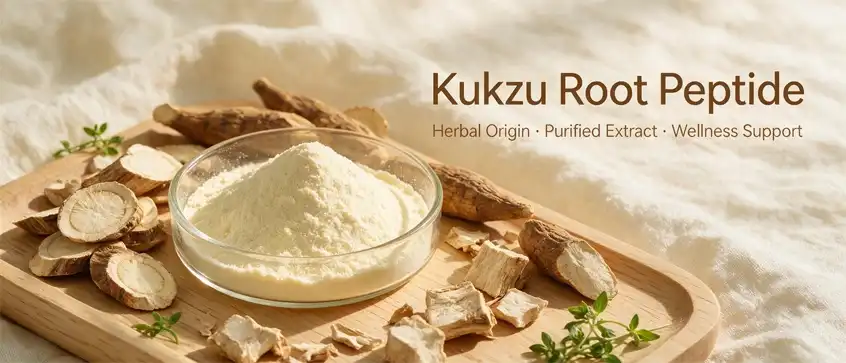
How Does Kudzu Root Peptide Work in the Body?
From Stomach to Small Intestine: Digestion and Absorption
Let's follow the ingredient as it goes through the body from now on. In the gut, which is the first place food breaks down, pepsin cuts long fatty strings. Trypsin and chymotrypsin are enzymes made by the pancreas that stop more from moving through the small intestine. The job is done by acids and bases on the gut walls. Free amino acids, dipeptides, and tripeptides are taken in by cells in the gut through different transporters. A 2004 study of physiology talked about this process. It is also possible for very small peptides to pass through the intestine. It doesn't look like this group is very big, though. So, when I think of kudzu root peptide, the first thing that comes to mind is a part of food. What happens depends on the person, the food matrix, the molecular weight, and the stability of the molecules.
What Research Shows and What It Does Not
Udenigwe and Aluko wrote in the Journal of Food Science in 2012 that these results need to be confirmed by testing them in living systems and making sure they are bioavailable. Food-derived peptides can work as antioxidants in test tubes. People who study kudzu often look at the root for puerarin and other isoflavones. There are many things they look at, like how it impacts blood flow, the body's ability to use booze, and the signs of menopause. In 2014, Zhou and others wrote about this in Phytotherapy Research. In 2011, the Journal of Ethnopharmacology reported that the root has been used in traditional ways for a long time. That doesn't seem to prove that there is a peptide. Healthy brands don't say that their products will make you sick.
Potential Kudzu Root Peptide Benefits and Functional Uses
Functional drinks, pills, tablets, sachets, meal replacements, and protein powders are some of the most common types. Companies typically add plant-based protein to their goods using kudzu root peptide.
Kudzu Root Peptide Extraction, Solubility, and Formulation Performance
Typical Kudzu Root Peptide Manufacturing Route
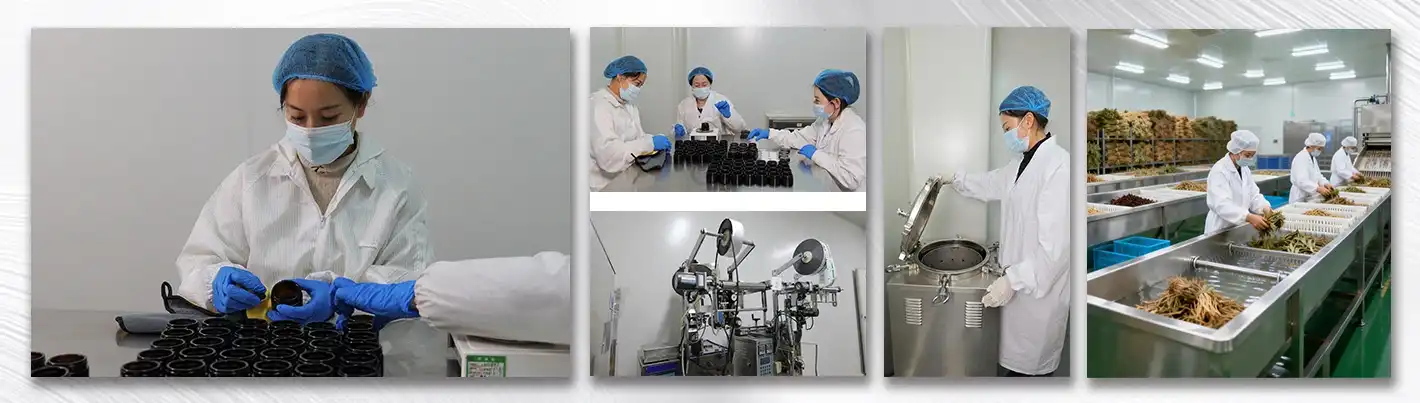
The type of enzyme, the temperature, and the length of time it takes for the molecules of kudzu root peptide to break down all play a role. The taste, structure, and spread of molecular weight are also changed by these things. Ultrafiltration and controlled drying help the product keep its color, purity, moisture, and ability to fight off microbes. You should be able to see the whole process from start to finish. To find out if they can get enough in the long run, I tell B2B buyers to ask for sample batch data and a process outline.
Kudzu Root Peptide Solubility and Stability
These factors include molecular weight, pH, temperature, ionic strength, particle size, and drying conditions. They can all change how well something breaks down and spreads. Powder lasts longer, ships for less money, and is less likely to have germs on it. But you need to be more careful with liquid concentrates. Also, the people who make the formula should make sure it isn't bitter, smells like plants, is cloudy, settles, and can hold water. They should also make sure that it can be mixed with acids, minerals, flavors, sweeteners, and plant-based foods. This is because rapid data doesn't always tell us what will go wrong. To test for stability, we should use real-time storage, humidity, temperature, light, and freeze-thaw cycles.
Practical Formulation Recommendations
Make sure the powder can flow, fill the capsules or tablets, and not break when compressed. As long as the drinks are still fresh, pay attention to the pH, heat, chemicals, clarity, and sedimentation. Each mix of plant proteins, amino acids, herbal remedies, vitamins, and minerals needs to be looked at on its own to make sure it works well with the others. Don't wait to use sensory panels; people decide quickly if they like something based on how it tastes and smells. Before you choose the amount, claims, or measure size, make sure it is safe, legal, stable, and works well. There is less work to do during the big batch if the trial batch comes from a source that can help.
Kudzu Root Peptide Comparison and Quality Evaluation
How It Compares with Other Ingredients
Puerarin and other isoflavones, which are found in kudzu root extract, are good for you. Collagen peptide and soy peptide are made from different proteins and have different amounts of amino acids. They're also employed in various tasks. Some people in the US are allergic to soy more than any other food. Colloids come from either living things or the ocean. The shape of synthetic peptides is set, and they often have to deal with different regulatory positions. Kudzu root peptide fits with the idea of nutrients that come from plants or are organic. The price per kilogram isn't the only thing I tell procurement teams to look at. They should also look at specifications, proof, and application performance that are the same.
How to Evaluate Kudzu Root Peptide Quality
The product's molecular weight range, moisture, ash, pH, solubility, bulk density, and microbiological limits are all written on the specification sheet. This is the first thing that is looked at. You might need to add heavy metals, pesticide residues, mycotoxins, solvents that are still there, allergens, and screens that can be used to change the product in order to reach a certain market. These tests keep your business safe because plant-based goods can have chemicals in them that are bad for the environment. Seek to understand how two labs arrived at different peptide amounts if they do give them to you. Check out a pilot lot to see how far you're willing to go before committing to volume.
Certificates of Analysis and Certifications
The name of the product, the lot number, the test methods, the acceptance limits, the actual results, the date of manufacture, and the quality approval should all be on a batch-specific certificate of analysis (COA). Check the COA against the specs and the sample that was saved. Part 111 of 21 CFR says that US companies that make finished supplements must check the names of the ingredients and make sure they meet certain requirements. This is why having good papers from the supplier will help you check faster. Check out more than just the trade company's name. Look at the GMP, HACCP, ISO, organic, non-GMO, halal, or kosher papers for the factory as well. BioSpark keeps an eye on the raw materials, the production process, and the finished product by using quality standards from around the world.
How to Choose a Kudzu Root Peptide Supplier and Place a Bulk Order
What to Check Before You Choose a Manufacturer
Write down everything you need to know about the kudzu root peptide provider, such as what it's used for, who it's made for, how much is made each year, the dosage form, the certificates, the packaging, and anything else you can think of. Then, give each supplier a score based on how well they check the quality of their raw materials, make the product, offer pilot support, keep track of batches, provide technical support, and break down the compound. Check out business terms like MOQ, sample policy, wait time, pricing reasons, and different kinds of packaging. Check the factory's credentials, the most recent COAs for the company, and its history of exports to see if it's ready for an audit. You can test the market without leaving too much stock on the table if your partner can handle both small and large runs.
From Sample Request to Bulk Order
Examples that are clear about what they're for, who they're for, how much they need each year, and what specifications they need are asked for. To get a good taste, ask for both the sample and the batch COA that comes with it. Next, the R&D team checks the last dose form to make sure it breaks down, stays stable, kills germs, and does its job. Know the MOQ, lead time, Incoterms, payment terms, shelf life, export documents, and the MOQ. These jobs are the responsibility of the buying and safety teams. Lastly, make sure you sign a quality agreement that spells out the standards, test methods, ways to handle changes, ways to handle nonconformances, and samples you should keep. With this order, your first business shipment will go off without a hitch.
How BioSpark Supports OEM and ODM Projects
BioSpark Co., Ltd. has sold health products to people in the Middle East, Europe, North America, and South America. International quality methods and strict tests are used by us. Because we offer OEM and ODM services, we can make unique forms for our clients. We can also customize a small batch and make a lot of them. We begin by going over what you need and who you want to sell to for a kudzu root peptide project. Then we make the sample and the production plan based on what we've learned.
Conclusion
Kudzu root peptide is a plant peptide that water has broken down. In the body, enzymes cut the chains shorter, and the gut takes in amino acids as well as di- and tripeptides. This is how all proteins work. This is affected by the food structure, molecular weight, order, and stability. A lot of research has been done on kudzu, but most of it is on the root's puerarin and isoflavones. Peptide supplement claims need to be careful and correct in this case. How it was made, how stable it is, and how well it worked in the recipe the first time are all things that matter. Even if the batches are different, the specs and certificates for the goods must be the same. Then people can see how kudzu root peptide stacks up against other peptides like extract, soy peptide, collagen peptide, and manufactured peptides. There should be a clear way from the sample to the quality agreement so that the source stays the same. To help with this, there should also be clear instructions and technical support.
FAQ
Is kudzu root peptide the same as kudzu root extract?
The kudzu root peptide comes from a protein in kudzu that water broke down. Most of the time, an extract is used to find isoflavones like puerarin. Because the sheets are always different, you should check them first. They're not the same and have different proof.
How does the body absorb kudzu root peptide?
Enzymes break down long strings of food into small peptides and amino acids. Transporters in the gut then take in these parts. There may be some very small peptides that make it all the way through. It's important to test the finished product because what happens depends on the molecular weight, the order, how well it breaks, and the base of the food.
Which documents should I request from a supplier?
Ask for information about the product, a production site certificate, a certificate of analysis (COA) for a certain batch, information about how stable and soluble the product is, and a written statement of the MOQ and wait time. Someone who ships things and has new export papers also shows that they are skilled.
Can I use it in supplements and functional beverages?
You should use the amount you want to use to test the pH stability, solubility, taste, and clarity in your own mix. It might work for both. Early on, look at the MOQ because it's different for each project and style. For the people you want to reach, make sure what you say is true.
Request a Kudzu Root Peptide Sample or Bulk Quotation
BioSpark needs to know what kind of product you want, what market you want to reach, how pure or kudzu root peptide you want it to be, how it needs to dissolve, what approvals you need, how you'd like it packed, and how much you want. No matter how big or small the order is, we can help with OEM and ODM projects. You can talk about the lead time, MOQ, and COA. To begin, email your question to sales@biosparkcn.com or go to https://www.biosparkcn.com/.
References
1. Daniel H. "Molecular and Integrative Physiology of Intestinal Peptide Transport." Annual Review of Physiology, 2004.
2. Udenigwe CC, Aluko RE. "Food Protein-Derived Bioactive Peptides: Production, Processing, and Potential Health Benefits." Journal of Food Science, 2012.
3. Zhou YX, Zhang H, Peng C. "Puerarin: A Review of Pharmacological Effects." Phytotherapy Research, 2014.
4. Wong KH, Li GQ, Li KM, Razmovski-Naumovski V, Chan K. "Kudzu Root: Traditional Uses and Potential Medicinal Benefits in Diabetes and Cardiovascular Diseases." Journal of Ethnopharmacology, 2011.
5. Hartmann R, Meisel H. "Food-Derived Peptides with Biological Activity: From Research to Food Applications." Current Opinion in Biotechnology, 2007.
6. U.S. Food and Drug Administration. "Current Good Manufacturing Practice in Manufacturing, Packaging, Labeling, or Holding Operations for Dietary Supplements (21 CFR Part 111)." Federal Register, 2007.

Send Inquiry
You may like