Green Plum Powder Benefits: A Supplier Evaluation Checklist
Nov 27, 2026
Green plum powder is a natural source of organic acids, led by citric acid, along with malic acid, chlorogenic acid, flavonoids, and triterpenes from Prunus mume. Its benefits only matter commercially when a supplier proves them in writing. That proof covers acid content, pH, color, aroma, safety, and supply. I built this checklist around five areas: raw material, process, compliance, format and packaging, and commercial capacity. Use it to compare quotations on evidence rather than price alone, and to decide which samples deserve a pilot order.
Green Plum Powder Benefits and Product Characteristics Buyers Should Understand
What Green Plum Powder Contains
Green plum powder is made from the Prunus mume fruit, which is also called ume in Japan. People in the business world say that ripe green plums have between 3 and 6 percent organic acids. Most of that amount is made up of citric and malic acids. This is a lot more than most fruits have. Our powder gets more than 60% of its acids from a plant. Oleanolic acid, succinic acid, and chlorogenic acid are some of the flavonoids and triterpenes that are in it. I tell people who want to buy green plum powder that general nutrition tables don't show what the finished powder looks like, so they should send me information about the amount of water, acidity, and bacteria in the plums before they send them.
Functional Benefits That Support Product Claims
Most of the time, these pros are what push people to make something. More energy comes from citric acid, which is part of the tricarboxylic acid cycle. This is why recovery drinks are good for you. There are many kinds of antioxidants, such as chlorogenic acid and flavonoids. People have looked into how the acid in olive oil can help protect the liver. This is why companies that make goods to help the liver are interested in it. Because it has a lot of acid, green plum powder lets spice makers use less salt while still keeping the sour taste. In these points, we talk about research that has been done on ingredients, not on how a finished product works. In the US, a law called DSHEA controls it. For that reason, I tell brands that for every structure-function claim they make, they should have their own proof and a lawyer look it over.
Core Specifications to Match
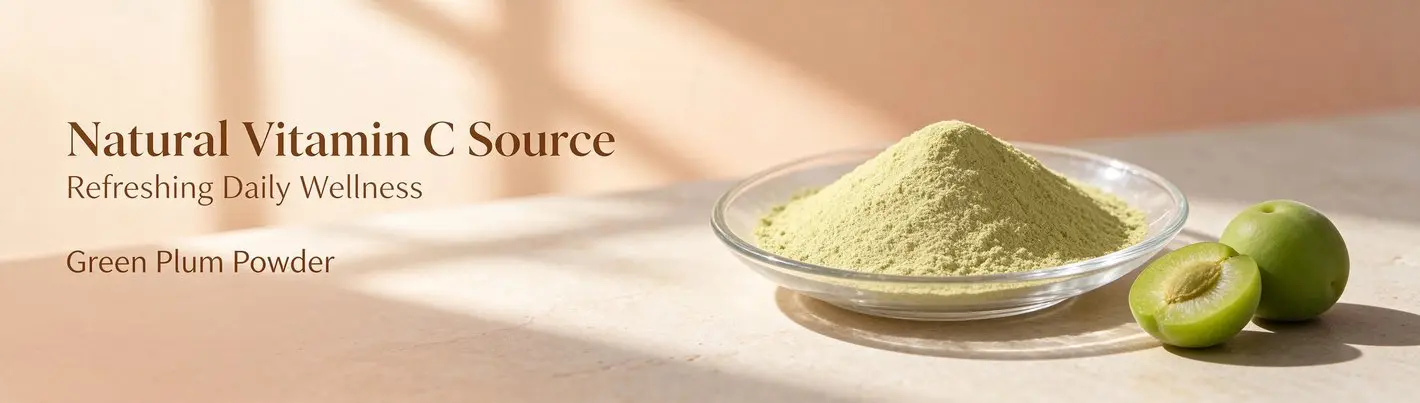
You can look at different quotes once you know what you need. This green plum powder is very fine and a light green to yellow-green color. It smells like sour green plums. It's 80 mesh and breaks down a little in water and ethanol. For 24 months, the pH stays between 3.0 and 3.8. These groups have all given their approval: GMP, Kosher, FDA, and ISO9001. It's from China. Thin-layer chromatography is what TLC stands for. It checks for organic acids. You can quickly tell if something is real by its color and smell. If something is dull brown or smells flat, it was stored incorrectly or has oxidized.
The First Supplier Evaluation Dimensions: Raw Material, Processing, and Compliance
Raw Material Origin and Traceability
The garden is where it all begins. That fruit looks cool. How was it grown? When was it picked? How was it tracked from being picked to being sold? That's what I ask all of them. The fruit's acidity and taste change based on when it is picked. They can clean, sort, and write down each lot. After that, they can say why every bunch is the same. If they can't say where they're from, that's not a good sign. We can show you proof that our green plum powder comes from China along with the price. If they all give you the same piece of paper, you can compare them.
Extraction Method and Quality Controls
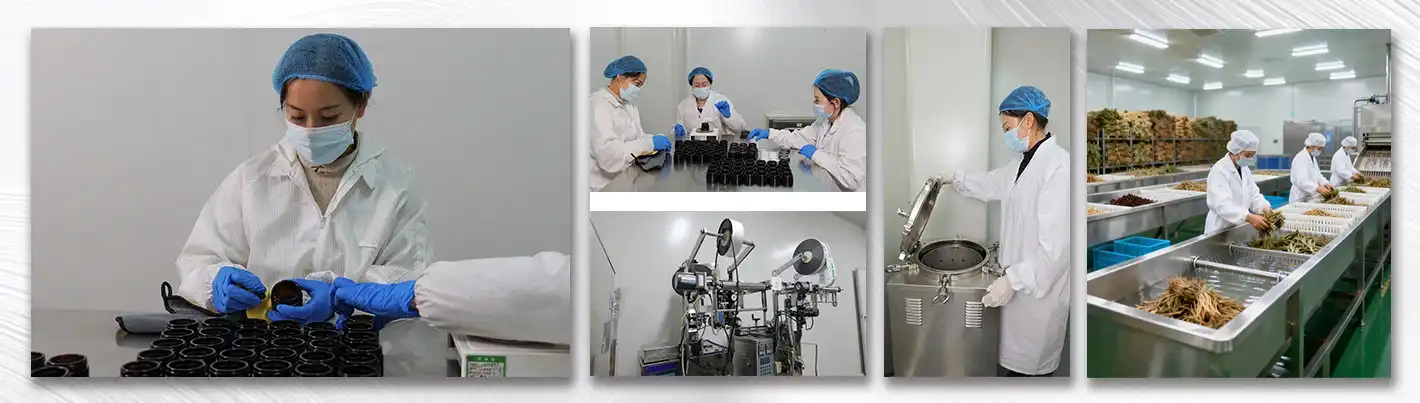
When chemicals, color, and smell are used on them, they either stay alive or die. When the plants are 40–45°C, they are picked. Then we use HPP, which stands for "high-pressure processing." It protects smells that don't like heat, so we can clean without it. Our four-step process is meant to get rid of the sourness, keep the color, improve the smell, and keep the acidity. Buyers are worried about acid loss, turning green to brown, and a weak smell. These things are taken care of by the four goals. Do some research on the company before you buy their green plum powder. Find out how the plums are cleaned, what temperature they are extracted at, how the process works, and if there are any controls used, such as metal detection and sieving. Also, find out what test method supports the acid value that was given.
Certifications and Documents Importers Need
The law only lets you have one certificate, and it has to be up-to-date, show where the item was made, and cover the whole thing. We have ISO9001, GMP, Kosher, and FDA records. Every time you send green plum powder, you should include a full file. This file should have a note about allergens and GMOs, bacterial data, pesticide and heavy metal tests, and a batch COA. It should also have a TDS and an SDS. The FDA's Foreign Supplier Verification Programs rule says that people in the U.S. who bring food into the country may need to follow it. Because of this rule, you need to check out foreign suppliers. Keep these papers safe; you may need to look at them later. Before giving a company the go-ahead, you should talk to a lawyer about how the rules touch on your things.
Format, Stability, and Packaging: Matching Green Plum Powder to Your Application
Matching Format to Your Formulation
Don't pick a style based on its name or price. Pick one based on how it leaves your hair. Without adding sugar, the powder can be used to make drinks and recipes. You can make drinks quickly with sweetened or mixed forms, so make sure you get a full makeup statement that shows all of the carriers. With this, you can see how much sugar is being talked about and how to keep the dose in check. Our green plum powder is great for herbal drinks, liver-healthy pills, sugar-free sweets, baked goods, salad dressings and marinades (instead of lemon or vinegar), and plum wine, juice, and sauce. The people who make drinks should check their own recipes to see if they are acidic, lumpy, or simple to mix. That test is simple since we only need 1 kg.
Stability and Shelf Life
Powder doesn't last long because it turns brown, breaks down in acid, or the pH changes. You should ask for a faster or real-time stability report that keeps track of germs, color, smell, acidity, solubility, and moisture. Our green plum powder will stay good for 24 months if we keep the pH level between 3.0 and 3.8. Because pH changes how a drink tastes, the people who make drinks need to make sure that each batch has the same pH. Keep the powder somewhere cool, dry, dark, and away from strong smells. Organic acid powders can get wet, so keep them somewhere dry and in a box with a lid.
Packaging, Labeling, and Shipping
We usually store our green plum powder in a 25 kg drum that has nitrogen cleaning, a desiccant, and a metal composite bag. It's made to keep air and water out for a long time while it's being shipped. Other things that private-label projects should check are the net weight, palletization, batch code, artwork, and the fact that they can't be changed. The terms we offer are FOB, CIF, CFR, EXW, DAP, and DDP. We can ship quickly by air or sea freight. We'd rather get a T/T in the mail. Things that aren't special are sent in 30 days, and things that are sent straight to the US are sent in 15 days after you place your order.
The Fifth Dimension: Commercial Capacity, Supply Stability, and Ingredient Comparisons
Total Landed Cost Beats Price per Kilogram
A low price per kilogram might come with extra costs. Two or more items must be bought before prices can be compared for each item. The prices for these items can be found on the same sheet. When you get an EXW cost, you don't have to pay for shipping or imports. But they are when you get a DDP price. Ask each seller how they decide how much to charge for test orders, samples, and large sales. When someone signs a contract to buy something once a year, they should also find out how the prices will stay the same. Giving each quote the same details about the green plum powder and how it will be shipped is the fairest way to compare prices.
Capacity, Inventory, and Lead Time
As long as you have enough, you can stick to your list of things to make. What times do different fruits ripen? Find out from each provider how much raw material they have on hand, how quickly they can get more, and what they'll do if something goes wrong. So that we can serve you quickly, we keep more than 1,000 tons of things on hand. Every order is sent out 10 days after it is made. To make something special, it takes around 30 days. People who make spices and drinks decide quickly and restock often, so that number cuts down on the time it takes to make plans. Do you know how to formulate, blend, change the particle size, give dosage advice, and pack for retail sale? This is important for OEM and ODM projects. You have to sign a form saying you will keep the formula secret before you give it to someone else.
Comparing Green Plum Powder With Alternative Ingredients
Sour plum powder and ume powder may be sold together in some stores. But read the whole list of chemicals and find out where the plant comes from before you buy. Adding lemon juice changes the way something smells, tastes, looks, and how much sugar is in it. When it comes to how they work, whole-fruit powder and plum extract are not the same. Green plum powder has plant chemicals, malic acid, and succinic acid added to it as part of the clean-label project. Things taste sour when you add citric acid to them by itself. For both organic and conventional grades, check the labels, prices, what the market wants, and how easy it is to get. You can't just say one is better than the other.
Risk Control, Checklist, and Final Selection of a Green Plum Powder Supplier
Common Supplier Risks and How to Avoid Them
Five of the most common risks are not enough information about the nutrients, acidity, or taste that doesn't match, health claims that aren't backed up by proof, fake certificates, and water damage. I used simple rules to cut them down. Get a full specification, a process plan, a current COA, and a business sample before you say yes. Make a list of measurements that can be used to check for color, acidity, wetness, particle size, microbiology, and bacteria. You should also keep a sample that you can use to compare to other lots. Find out what the product covers, such as who made it, when it was made, and what places it covers. It should be clear who is in charge of fixing issues, taking care of complaints, returning items, or letting people know about changes to the supply agreement.
A Practical Supplier Evaluation Checklist
Here is the green plum powder checklist I use, grouped into three parts. Product qualification covers the taste, color, acidity, mesh size, how well it works in certain settings, how long it lasts, and how to store it. Supplier qualification covers their plant, how to track and recall goods, how long you will have to wait, how they can make changes, and what tests they can do. Commercial approval covers minimum order quantity (MOQ), price ranges, packing, Incoterms, payment terms, delivery plans, and quality agreements. A weighted scorecard keeps the comparison objective. There are different amounts you can give: 25% for safety and quality of the goods, 20% for cost, freedom of speech, and communication, and 10% for safety and cost. Use the weights to help you.
Choosing the Right Supplier for Your Business Model
What you need and the type of business you run will determine who you buy from. Most of the time, distributors care about things like stock, standard packaging, paperwork, and wholesale prices. Companies that make things need to know what to do and talk to other people to get ideas. Many times, OEM brands need to be left alone, have their own packaging, and have pH and organic acid levels that are specially made for them. The level of acidity can be changed in BioSpark. It can also be mixed with plants that are good for the liver, such as curcumin and silymarin, and turned into chewy, pill, or powder forms. It's easy to get help with this plan. It is first screened, then papers are looked over, samples are made, applications are tried, and a green plum powder trial order is placed. Even though going straight to the maker might help you keep track of things, every claim still needs to be checked against shipping performance and records.
Conclusion
When you want to buy green plum powder, you should think about more than just the cost. There are flavonoids, triterpenes, citric acid, and other organic acids in that part of the recipe. But how much it's worth depends on its pH, mesh size, color, smell, and how it was measured. A good supplier should be able to find basic materials, make sure that extraction and sterilization are done correctly, have up-to-date certificates and batch records, pack their goods well so that they stay stable while they're being stored, and give a clear landed cost with steady capacity. The powder is different from the mixed ume powder, lemon powder, plum extract, and citric acid. Each one is used for a different scientific reason. For buyers, getting wrong information, promises that can't be backed up, and water damage are less likely to happen when they set clear limits and test samples in their own recipes. With a weighted review and a test order, this is an easy choice that can be used over and over.
FAQ
What can green plum powder be used for?
It can be used to make healthy drinks, pills that help the liver, salad dressings, marinades, sugar-free sweets, baked goods, and plum wine, juice, or sauce. Choose the right grade and structure for the job, and first try out a piece in your own style.
How should I store it?
Keep it somewhere cool, dry, dark, and away from bugs, strong smells, and heat. Our powder can be kept for 24 months, and while it's being shipped, a desiccant-filled metal combination bag keeps it safe.
Which documents should I request?
You should ask for an up-to-date batch COA, a specification, TDS, SDS, bacteria data, an allergen statement, information on where the product came from, and the certificates themselves. Each certificate should have a picture of the item and say where it was made.
Can I order a sample before a bulk purchase?
You only need 1 kg to test for taste, acidity, solubility, and compatibility. Please keep in mind that we only sell to companies.
Request Your Green Plum Powder Evaluation Package From BioSpark
BioSpark gives away a test package with a 1 kg sample, a specification sheet, copies of certificates, price levels, and lead times when they make green plum powder. What you want to do with it, where you want to put it, how much you want to spend, and what kind of packaging you need. We do OEM and ODM work, and we sign NDAs to keep your information safe. We have more than 1,000 tons of goods in stock. You can email your questions to sales@biosparkcn.com or visit https://www.biosparkcn.com/.
References
1. Dietary Supplement Health and Education Act (U.S. Congress), 1994
2. FDA Food Safety Modernization Act (U.S. Congress), 2011
3. Foreign Supplier Verification Programs for Importers of Food for Humans and Animals (U.S. Food and Drug Administration), 2015
4. Pharmacopoeia of the People's Republic of China (Chinese Pharmacopoeia Commission), 2020
5. ISO 9001:2015 Quality Management Systems – Requirements (International Organization for Standardization), 2015
6. General Principles of Food Hygiene, CXC 1-1969 (Codex Alimentarius Commission), 2020

Send Inquiry
You may like