Dehydrated Purple Yam Powder Supplier: 7 Quality Checks
Nov 18, 2026
To be a reliable source of dehydrated purple yam powder, the source must pass seven quality checks. These include confirming that it comes from the right plant, having a written record of the dehydration process, giving clear instructions, testing for food safety and application performance, protecting the powder, and having clear business terms. Teams that buy things can use this guide to compare offers based on more than just price. This is for people who make supplements, foods, imports, or sell things in the US. There is a list of things to ask for and documents to ask for under each check. You can try BioSpark (Xi'an) Biotechnology Co., Ltd.'s own dehydrated purple yam powder before you buy a lot of it.
Why Supplier Quality Matters for Dehydrated Purple Yam Powder
Why Price Alone Misleads Buyers
There may be two prices for dehydrated purple yam powder that look the same on paper, but they may have very different effects on your plant. One could hold a lot of carriers. You might also use a different tuber. The color of a third might change from one batch to the next. Having these holes costs money because they lead to extra work, failed tests, and unhappy customers. A lot of the raw materials are hidden from supplement brands, distributors, and private-label teams. People who want to buy something should see proof, like papers, test results, and examples of how well the supplier has done in the past. Price is important, but you should only buy something after you can prove who you are, that you are safe, and that you can be trusted. People don't have to wait weeks when checks are done early.
Ube, Purple Yam, and Purple Sweet Potato: Know the Difference
It's written as "ube" sometimes instead of "purple yam," and some places sell purple sweet potato powder instead. The two crops come from different plants. Most of the time, purple sweet potato is Ipomoea batatas and purple yam is Dioscorea alata. They need different labels because they have different amounts of starch and taste different. If you mix them up, they might not work right. The same goes for people who bring goods into the US. As part of the FDA's Foreign Supplier Verification Program, many companies that bring food into the US have to prove that the food made by their foreign suppliers meets US safety standards. Because of this, I think it is best to get written confirmation of the plant's identity before talking about prices or samples.
What BioSpark Offers at a Glance
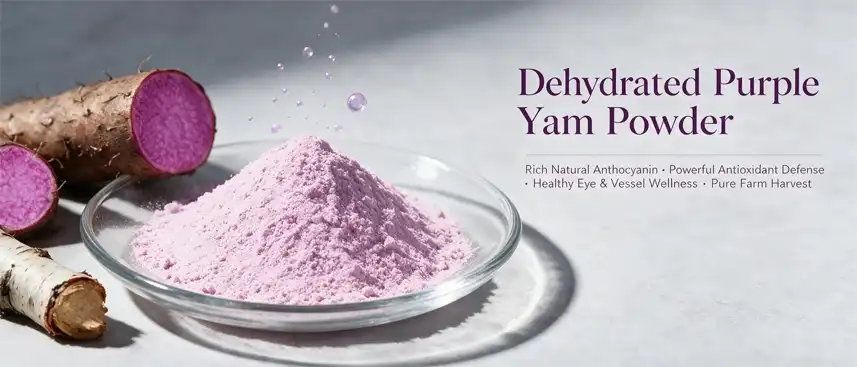
To keep things real, I show how this guide works with our own project. In order to ensure that it contains 10% anthocyanins, BioSpark transforms plants from China into dehydrated purple yam powder. It's 100–120 mesh and a purple to dark purple color. It has a potato-like smell. The bulk density should be between 0.4 and 0.6 g/ml, and the moisture level should be 7% or less. A lot of it breaks down into water and ethanol, but not all of it. Even if you only order 1 kg, we'll pack it in 25 kg drums. OEM and ODM can do work for you. Look at this picture to get an idea of how a clear specs sheet should look.
Quality Checks 1–3: Identity, Process, and Specifications
Quality Check 1: Verify Purple Yam Identity and Ingredient Purity
First, ask for the plant's scientific name, a list of all the parts that were used, and the part of the plant that was used. You should be wary of sellers who can't say if the powder comes from purple yam, ube, or sweet potato. Next, find out about the movers. Some types of dehydrated purple yam powder have different labels that say different things. Some grades have maltodextrin and anti-caking agents added to them to help them flow better and stay stable. If someone wants to buy from us, they should look at the list of ingredients to make sure it's the right grade. Also, ask the seller if they preserve the food with sugar, dyes, or chemicals. Put the best use, appearance, taste, moisture, and raw material next to each other on a table. You can find a mistake this way before it gets to your formula.
Quality Check 2: Evaluate the Dehydration and Manufacturing Process
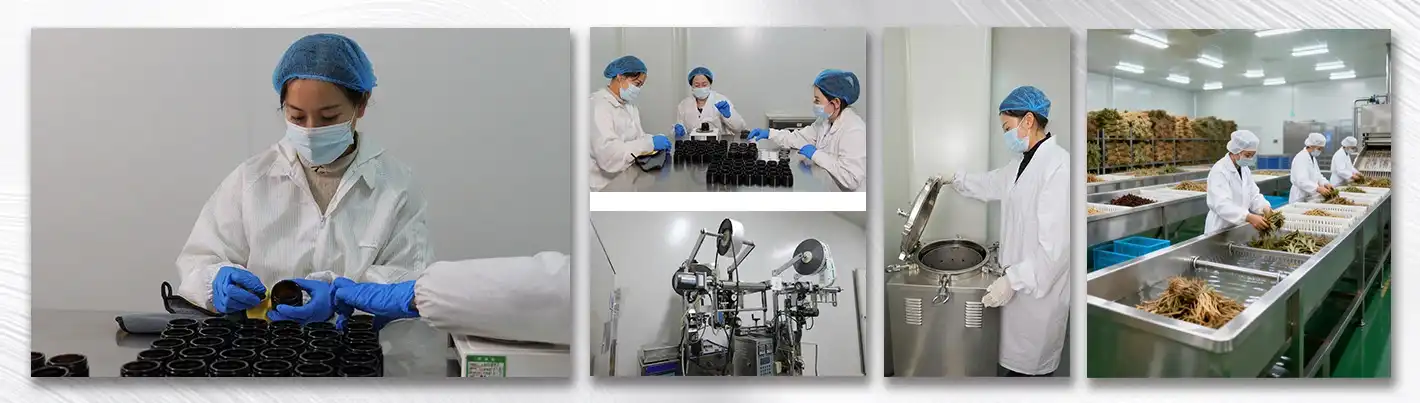
Ask each supplier for a flow chart to see how it changes color, breaks down, and stays stable against microbes for longer. We wash, peel, cut, and juice the squash to make our dehydrated purple yam powder. The pulp is put back into the extraction tank, and water is used to pull it out slowly. This is where the polysaccharides and anthocyanins that were left behind are taken care of. Once the extract was clean, it was mixed with the first juice. To make it stronger, we used a low-temperature vacuum. Then we spray-dry, jet-mill, sieve, and heat-sanitize them. Some suppliers may dry the goods with hot air or freeze-drying, which can change the price and how the color stays the same. Ask for a sample that looks good, but don't stop there. Also ask how it was dried, what the milling mesh was, and what the records are for each batch.
Quality Check 3: Review Physicochemical and Nutritional Specifications
The checks that can be made should be written on a technical specification sheet. With a bulk density of 0.4–0.6 g/ml, a moisture level of 7% or less, and particles that are 100–120 mesh, our dehydrated purple yam powder meets the requirements for HPLC. They alter where things are kept, how much is given, and the way they are set up. HPLC is a useful tool for separating and measuring different chemicals. The anthocyanins cyanidin-3-glucoside and peonidin-3-glucoside are the most important ones in this case. You can find purple yam with vitamins, minerals, resistant starch, polysaccharides, and dietary fiber. But our product page doesn't say how much of these things it has. When you put nutrition facts on a label, make sure you get lab data for each batch from the company that sent them to you.
Quality Checks 4–7: Safety, Performance, Packaging, and Terms
Quality Check 4: Verify Food Safety and Contaminant Controls
Find out what tests are done on each lot and ask for a certificate of analysis (COA). A lab checks each batch to make sure it is safe, pure, and consistent, and the COA shows that the tests were done correctly. Pesticides, microbes, and heavy metal levels are often checked to make sure they follow the rules set by people in the US. Also, supplement companies should remember that the FDA's rules (21 CFR Part 111) say they need to make sure the ingredients they use are real. Make sure the certificate the seller gives you is up-to-date, shows the right factory, and covers the item you want to buy. People who want to buy dehydrated purple yam powder may ask different stores if they follow food safety management standards like ISO 2201.
Quality Check 5: Test Color, Flavor, Solubility, and Application Performance
You can't tell how a powder will work in your recipe by testing it in the lab. Try the same amount of your real product from each supplier. You can use our dehydrated purple yam powder in muffins, boba tea, ube-style lattes, plant-based milks, meal replacement powders, capsules, tablets, and purees of fruits and vegetables. Anthocyanins change color when the base changes pH, so keep an eye on it. Since the powder has been sieved to 100–120 mesh, check your own liquid for lumps, sediment, and dispersion. Before you freeze or bake the baked goods, make sure they will stay stable in your oven.
Quality Check 6: Inspect Packaging, Shelf Life, and Storage Stability
Powder doesn't like water, so how it's packed is important. From BioSpark, 25 kg drums of dehydrated purple yam powder are shipped. For a business customer, the first order is 1 kg. Ask each supplier to write down how long the food will last and what the best temperature, humidity, and light level are for storage. The grade of food, how it's packed, and where it's kept all affect how long it will last. The food's name, the lot number, the date it was made, the best-before date, the net weight, and the country it came from should all be written on each box. Lot numbers help you keep track of everything. As soon as someone complains, you need to quickly connect the records of the work and raw materials to the finished goods.
Quality Check 7: Evaluate Supplier Documentation, Capacity, and Commercial Terms
The total cost might not be the lowest if the unit price is the lowest. You should find out more about the goods' features, how they were packed, and where they say they came from. Then find out how many items are still in stock, how long the lead time is, and if you can place another order. One clear quote tells you the minimum order quantity (MOQ), prices, sample fees, packaging, Incoterms, how to pay, and when the goods will be sent. It's also important to have volume that can be changed. To test something, BioSpark can take orders as small as 1 kg, and they can also make bigger batches. You can get our help to change the shape of an item and put your own label on it. Our team can also help you make the recipe, package it, and send it. People buy our goods in North America, South America, the Middle East, and both North and South America. Keep the art in OEM projects secret and make sure it's okay. The art can be changed.
How to Compare Dehydrated Purple Yam Powder Suppliers
Build a Supplier Scorecard
It keeps track of the things you think about. The price, the minimum order quantity (MOQ), any paperwork that comes with it, and OEM support should all be on the list. It should also say what the raw material is and whether it is safe for food. Rate how important each category is to you by giving it a weight. For a company that makes food, the specs and technical help may be the most important things. Someone who sells dehydrated purple yam powder might check how it is packed, how long it lasts, and how long the supply chain is open. First, look at the forms. Then, look at the examples. Providers who can't show basic papers won't have to waste lab time on them. Putting all of their scores on one sheet makes it easy to see which one is the best.
Avoid Common Mistakes When Buying
I keep seeing that mistake. People pick the cheapest option, think that purple sweet potato powder and purple yam powder are the same, or get a sample without reading the whole label first. Buying cheap powder can cost you in the form of waste, extra work, color drift, and downtime. You can't be sure that the next batches will be good just because you have a good sample. You need to write down the packaging, particle size, moisture, and color tolerance. Last but not least, know how to sell to the people you want to. Like, know how to label and list allergens. Talk to your importer or a regulatory advisor about these things before you use dehydrated purple yam powder in a finished product for the US market.
Follow a Controlled Procurement Process
First, you need to make a list of the papers you need, the amount, the color you want, the taste, the processing conditions, and what the product will be used for. There are two or three good suppliers who have done business overseas before. You should ask for samples and technical files, and then test all of them in the same way. Before giving the go-ahead, do a test run to make sure it works. The purchase agreement should spell out the quality standards, steps for inspection, packaging, lead time, minimum order quantity, Incoterms, and how to fix goods that don't meet the standards. Everyone is safe with these steps. It will also help your team when you buy dehydrated purple yam powder again next season.
Final Checklist: Seven Questions to Ask Before Ordering
These seven things should be talked over with someone else before you sign. Is that purple yam flavor really in the food? Are carriers on the list of things that are used? Can you decide how the grains are ground and dried? What do the specs say about the particle size, the amount of anthocyanin, and the moisture? Is there proof that a COA had safety tests? How do you keep track of the food, store it, and make sure it stays fresh for as long as possible? Have they got the right MOQ, price, lead time, and number of sales coming up? If the supplier says "yes" to all seven questions, they are ready for a test order. You need to decide what to do next after being told "no."
Conclusion
You shouldn't look for dehydrated purple yam powder all over the place. You should do a structured check instead. First, there is a full list of all the ingredients, along with the botanical names of each one. Then there is a written process, standards that can be checked, and a COA that lists round tests. There are tests that you can do on your product to make sure it is stable, the right color, and the right consistency. Goodbye! The powder is safe because it is sealed, has a use-by date, and can be found. The supply is stable if there is enough capacity and business is done in a certain way. With a scorecard, a pilot run, and a written outline, you can do all of these checks over and over again. When used together, color drift, rework, and compliance issues are less likely to happen, and buyers have a good way to pick a supplier.
FAQ
Is ube the same as purple yam?
People use the word "ube" in a more general way when they don't mean purple yam. When you ask for purple sweet potato powder, you should be told what it is not. You should also be given a list of the ingredients.
What is the minimum order for BioSpark's dehydrated purple yam powder?
People who are in business can order as little as 1 kg to try it out. 25 kg drums are used to ship large orders. You can get work done by OEM and ODM.
Does the powder contain carriers?
Maltodextrin and anti-caking agents can be added to the mixture if the recipe calls for them. This will help it stay stable and flow. Take a look at the list of things that determine your grade.
How should I test it in my formula?
Try it out in your own base. The powder is sifted through a 100–120 mesh screen. When the pH changes, the anthocyanins change color. Check out the color, how it spreads, and how stable it is when you mix it, bake it, or freeze it.
Request Dehydrated Purple Yam Powder Samples from BioSpark
You can get samples and a quote if your business makes food, sells food, or works with BioSpark. Dehydrated purple yam powder is what we produce. We have 10% anthocyanin powder that has been checked by HPLC. We have a minimum order size of 1 kg for business customers, and each batch comes with a COA. We can also help with both OEM and ODM. Send your application, how much you want to buy, and how you'd like it packed to leao@biosparkcn.com. Visit https://www.biosparkcn.com/ to see all of our work as well.
References
1. Food Chemistry, 2009 – "Chemical studies of anthocyanins: A review" (Castañeda-Ovando et al.)
2. Trends in Food Science & Technology, 2010 – "Encapsulation of polyphenols – a review" (Fang and Bhandari)
3. Current Protocols in Food Analytical Chemistry, 2001 – "Characterization and Measurement of Anthocyanins by UV-Visible Spectroscopy" (Giusti and Wrolstad)
4. U.S. Food and Drug Administration, 2015 – Final Rule on Foreign Supplier Verification Programs for Importers of Food for Humans and Animals
5. U.S. Food and Drug Administration, 2007 – Current Good Manufacturing Practice for Dietary Supplements (21 CFR Part 111)
6. International Organization for Standardization, 2018 – ISO 22000:2018, Food Safety Management Systems

Send Inquiry
You may like