Blackberry Fruit Powder vs Juice: Which Is Better?
Nov 25, 2026
Blackberry fruit powder is usually the better choice for supplements, dry beverage mixes, bakery premixes, and export shipments, while juice works better for ready-to-drink products and liquid production lines. Powder removes most of the water, so you ship less weight, store less volume, and dose with a scale instead of a pump. Juice delivers fresh flavor and a smooth mouthfeel without a rehydration step. Neither format wins every time. Your product format, equipment, shelf-life target, and total cost decide the answer, and this guide compares both formats to help you choose.
Introduction: Blackberry Powder or Juice—Which Format Fits Your Application?
Two Ingredients, Many Uses
Blackberry juice and blackberry fruit powder are added to drinks, vitamins, baked goods, dairy-free options, and other foods. Food can be stored in a small, dry form that can be dosed by weight with blackberry fruit powder, whether it's freeze-dried or spray-dried. It's ready to use, tastes like berries, and makes things feel smooth when you juice them. They both make vitamins, baked goods, drinks, and shakes, but they do each of those things in different ways. We sell blackberry fruit powder at BioSpark. It is made from the plant's fruit. We're not afraid to say that the blackberry fruit powder has changed how we feel.
Why Neither Format Always Wins
You can pick a format that works well for your business. What you already have, how big the product is, how long it needs to last, and how much it costs to land the product are the five most important things. A company with drums, pumps, and a pasteurizer might find juice useful. Anything that comes in pills, sachets, or sweets can be used by that brand. People who want to send goods abroad have to pay for each kilogram of water in a drink. Not just the price per kg, but also all of these other things. If you know your line and your market well, you won't have to guess as much.
Questions Product Teams Ask
The question that product teams ask most of the time is the same. Is blackberry fruit powder good for you in the same way that blackberry juice is? Does it work in smoothies? What does it do when you use it to bake? Could you mix it with something or use it instead of juice? The real answer to every question is how the part was dealt with. Each blackberry fruit powder, drink, taste mix, and powder made from extracts works in a different way, even though they all say "blackberry" on the box. Each part of this answer answers a single question. The next parts split the information about fresh fruit from that about items that are already cooked. You can't compare these two things in this way.
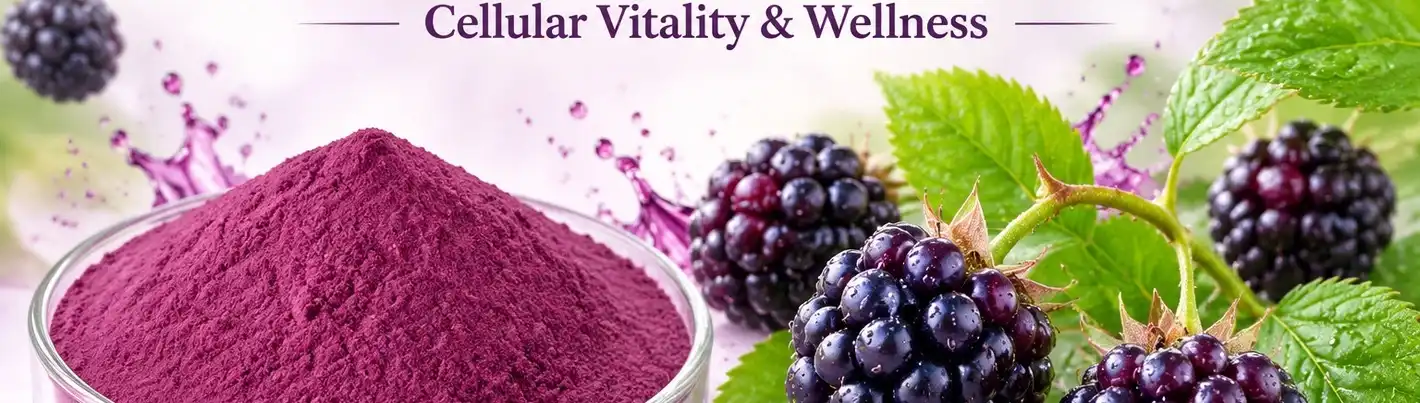
Blackberry Fruit Powder vs Juice: Key Differences at a Glance
Side-by-Side Comparison
The main changes in a short time are shown in this table.
| Factor | Blackberry Fruit Powder | Blackberry Juice |
|---|---|---|
| Form | Dry, fine powder | Liquid or concentrate |
| Storage | Small, dry, out of the way of light | Larger volume, often cold or aseptic |
| Shipping | Light, with little water content | Heavy, with a risk of leakage |
| Dosing | Accurate, by weight | By volume or Brix |
You should use that as your first filter. After that, use cases and specs to look at the details.
Freight, Storage, and Dosing
The USDA FoodData Central says that most of the water in fresh blackberries is what they are. Because it holds water, single-strength juice costs more to ship, store, and pack. Blackberry fruit powder gets rid of water, which makes the freight lighter, the warehouse smaller, and the freight less likely to leak. This method is better for quality control because the workers don't have to change the Brix or density of each batch. They just weigh it instead. It goes right into lines that already have tanks, pumps, and fillers if you put juice in them. A company that deals with liquids might care more about how well it fits than how much it costs to ship. It's easy to keep track of each lot of our blackberry fruit powder because it comes in 25 kg drums.
How Processing Changes the Result
Both forms need your attention. If you spray dry or freeze dry blackberry fruit powder, you can change its color, taste, and how much water it holds. When juice is squeezed, shaved down, or made clear, the amount of sugar, fiber, and vitamins in it changes. In 2010, Patras and his colleagues found that air, light, heat, and pH can all make anthocyanin less stable. The fruit of the plant is used to make our blackberry fruit powder. After that, HPLC checks to see if it has 15% anthocyanins. This way, buyers don't have to guess how much is really there. Before you compare quotes, make sure you know what process each company uses and how much it costs.
Nutrition and Functional Properties: Blackberry Powder vs Juice
Concentration per Gram
Blackberry fruit powder has more fruit solids per gram than juice because most of the water has been taken out. It could mean that the food with the same weight has more minerals, fiber, organic acids, vitamin C, and antioxidants. Still, it's important to know what kind of item it is. There are different kinds of blackberry fruit powder, such as whole-fruit powder, spiced powder, ready-to-drink juice, and syrup. There is too much sugar in some drinks and fillers like maltodextrin in some powders. Read the sheet that shows the specs before you compare the speeds. Based on the HPLC test, 15% of our blackberry fruit powder is made up of anthocyanins. Why does it work? Because of folic acid, cyanidin-3-glucoside, vitamin C, vitamin K, and fiber.
Why Fresh-Fruit Data Does Not Transfer
FoodData Central of the USDA says that 100 grams of raw blackberries have 5 grams of fiber. But that number doesn't always work for blackberry fruit powder or juice. The berry will change over time if it is cool, gets a lot of air, is a certain kind, and is kept for a long time. Among the most important ones in blackberries is cyanidin-3-glucoside, which is also found in blueberries. Kaume et al. (2012) say that it shows up in various food types in various ways. That's why we think you should look at the end result. A fresh-fruit table only shows what was in the fruit before it was sold. A chromatogram in an HPLC report, on the other hand, shows what the material is made of.
Vitamin C, Seeds, and Fiber
Fruits and foods that have ascorbic acid added to them are not the same thing. Food should say which one it has on the bag. Some of the vitamin C in blackberry fruit powders and drinks is lost when they are heated or exposed to air, so fresh fruit may have more of it. The seeds and juice change the fiber's shape, taste, and amount. Adding whole-fruit powder with seeds can make a drink feel rougher as it cools. Clear juice doesn't have much fiber, but it's easy to drink. Some of our blackberry fruit powder is mixed with water and ethanol, but not all of it. This means it can be used in drink mixes where some people don't like sediment.
How Blackberry Fruit Powder and Juice Are Made
Powder Pathways
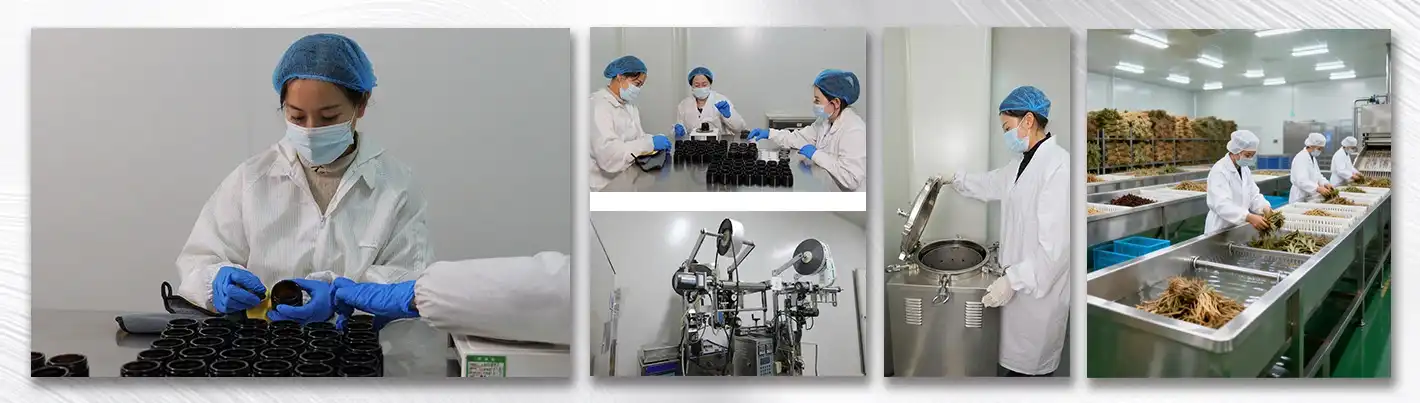
Before you can make blackberry fruit powder, you need to wash the fruit. The next step is to mash the fruit and, if necessary, get the seeds out. A cold vacuum is used to get rid of the water in something before it is freeze-dried. But Ratti (2001) says it costs more and doesn't keep the color or smell as well as drying with hot air. Wet things quickly break up into little pieces when you spray-dry them. It is common to add a carrier to help the particles move and stay fixed. Some substances, like anthocyanins, are more concentrated when they are taken out of plants before they are dried. An HPLC test is used to check the things we take out. The particles must be between 80 and 120 mesh so they can flow easily.
Juice Pathways
There are several steps to making juice. You can filter or press it, heat it, standardize it, reduce it, pack it in either an aseptic or controlled-temperature format, and sterilize it. This process makes food safer, but it also heats up the anthocyanins, which Patras et al. (2010) say breaks them down. Putting water back into a mix that has lost its strength makes it stronger again. To give you an idea, both routes begin with the fruit and then clean, sort, dry, check for quality, and pack it. At the end of each one, microbiology, heavy metals, and active chemicals are all checked.
Clear Terms for Clear Purchasing
Names are hard to understand, so write them all down. The whole berry is used to make whole-fruit powder. A binder is often mixed with juice powder to make dry pressed juice. Getting rid of the bits and pulp makes the juice clear. Water is added back into juice concentrate to make it work again. The blackberry fruit powder we use comes from an extract that makes something harder. There are different amounts of solids, fiber, and color in each name. Every piece of paper needs to have the type written on it. People don't check prices of different things because of this.
Application-Based Decision: Which Format Works Best?
Where Blackberry Fruit Powder Works Best
Blackberry fruit powder can be used in baking mixes, smoothies, pills, sweets, and protein bars. You can pick how much to eat, and adding water makes it look and taste better. pH changes, heat, and leavening agents can make the color look different. But when you bake, the blackberry fruit powder keeps the extra water out. When you mix drinks, you want the ingredients to stay on top. A blackberry fruit powder that mixes with water can help with this. As either an OEM or ODM service, we can make pills, sweets, and powders. You can also ask us to make anthocyanin in different amounts.
Where Juice Works Best, and Why Trials Matter
Fruit juice works well in sauces, ready-to-drink drinks, plant-based or dairy drinks, and juice mixes that need to taste like real juice. It breaks down right away and doesn't need an extra step. If you change the format, the color, flavor, acidity, viscosity, solids, and amount of water will all be different. You should look over the method one more time and do small tests before going big. Check out how the pH, sweetness, color, and time of processing change. You can see what color the blackberry fruit powder is and how well it melts before you buy the whole bag.
Cost, Logistics, and Supplier Checks
Not the price per kilogram, but the price as a whole. Prices change based on what kind of fruit it is, when it is picked, how it is packed, how much is bought, and how it is dried. A fair way to compare prices is to divide the amount of delivered fruit solids or anthocyanins by the price. Blackberry fruit powder is used instead of juice to save rack space and freight weight. For plants that already have tanks and extras, juice stays cheap. After that, make sure the seller is telling you the truth about the type of plant (Rubus fruticosus L.), where it came from, how wet it is, the particle size, the amount of heavy metals and chemicals that are still there, and the limits of bacteria. Get a list of the goods, a batch COA with a chromatogram, and proof of how they were made. People in the US should also ask for heavy metal lists because of Prop 65 in California. We have been given the green light by the FDA, GMP, Kosher, and ISO9001. We offer quotes for FOB, CIF, CFR, EXW, DAP, and DDP, and we pack 25 kg per drum. We ship by air, sea, or express, and we'd rather be paid by T/T. You can order as little as 1 kg.
Conclusion: Is Blackberry Fruit Powder Better Than Juice?
The drink and the blackberry fruit powder are both useful in different ways. Fruit solids are mixed together in blackberry fruit powder, so it ships lighter, takes up less space, and can be dosed exactly. It can be used in bars, gummies, baked goods, dry mixes, vitamins, and more. Juice makes ready-to-drink drinks and sauces feel like liquid and can be added through tanks and pumps that are already in place. Test results for fresh fruit aren't enough to replace them because nutrition relies on how the fruit was handled, how much was given, and whether sugar or other fillers were added. Some ways to keep anthocyanins and vitamin C in food are to freeze-dry it, spray-dry it, separate it, or heat it up. The best choice relies on how it will be used, what tools are available, how long it will last, how easy it is to get, and how much it will cost to make altogether. This is backed up by batch-level HPLC data and clear product descriptions.
FAQ
Is blackberry powder healthier than juice?
How healthy something is depends on things like how much you eat, how clear it is, how much sugar is added, and how it was processed. That is why you shouldn't compare format names, but test results for the end output.
Can powder replace juice in a formula?
You should figure out the acidity, texture, solids, color, and taste again, and then you should do a bench test. Blackberry fruit powder is great in mixed drinks and smoothies.
How can I verify antioxidant content?
Each lot has a different amount of vitamins. You should also ask for a chromatogram along with the HPLC anthocyanin data. Our blackberry fruit powder has 15% anthocyanins, according to HPLC.
What documents should a wholesale supplier provide?
As for the details, batch COA, certifications, test results, samples, MOQ, lead time, and how the product will be packed, ask for them. We can only send these if you buy at least 1 kg.
Request Blackberry Fruit Powder Samples from BioSpark
To choose between blackberry fruit powder and juice, it's better to try real samples. BioSpark is a business in Xi'an that makes blackberry fruit powder. Their 15% anthocyanin powder (HPLC) comes in 25 kg drums, and they can help with OEM and ODM. The minimum order size is 1 kg. Email sales@biosparkcn.com with your application, the amount of product you need each year, your target market, and the type of approval you need. Our team will respond with a specification, sample, and quote. Visit https://www.biosparkcn.com/ to learn more.
References
1. USDA FoodData Central, 2019 – Blackberries, raw
2. Journal of Agricultural and Food Chemistry, 2012 – The Blackberry Fruit: A Review on Its Composition and Chemistry, Metabolism and Bioavailability, and Health Benefits
3. Trends in Food Science & Technology, 2010 – Effect of Thermal Processing on Anthocyanin Stability in Foods: Mechanisms and Kinetics of Degradation
4. Journal of Food Engineering, 2001 – Hot Air and Freeze-Drying of High-Value Foods: A Review
5. Trends in Food Science & Technology, 2010 – Encapsulation of Polyphenols: A Review
6. Biochemical Engineering Journal, 2003 – Acylated Anthocyanins from Edible Sources and Their Applications in Food Systems

Send Inquiry
You may like